


A trillionaire has a proposition for you.


She says:
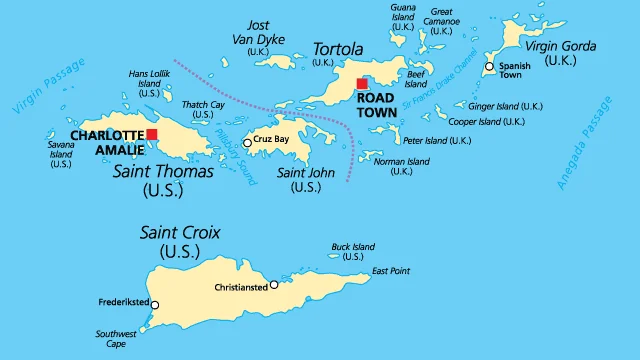
Name your price—an amount of money that would solve all your problems and guarantee your grandchildren’s grandchildren’s financial security—and once that money hits your account, nothing will change really: the islands will still exist and be just as beautiful (but richer); everyone could stay (no one is forced to leave); you will still live at “de second house afta de big tahmon tree on de left” (as opposed to the address on your VIYA bill); and the pate lady will still be slightly cranky all the time, but it’s all love.
The only catch: You’ll have to give up Virgin Islands culture—completely. No legend of the goat woman, no food fair, no madras, no road march, no Carnival village, no calypso, none of it.
But you have to decide now. No “what abouts,” no questions.
Decide.
If you ask the 80,000-ish VI residents and the wider diaspora of people who are from or closely tied to the Virgins, the answers will be all over the place—from “I’ll never sell—VI til I die” to “give me the money, I don’t need no J’ouvert.” The future is demanding answers, even if we haven’t noticed. In a sense, our individual answers to the proposition are not as important as the questions it raises about cultural innovation and cultural erosion, social and demographic change, the definition of culture, the psychological and economic value of culture, how cultures adapt to their latest “in-laws” by way of immigration, how endangered is VI culture—and is that even a thing?
Those questions lurk beneath the surface of many of the territory’s challenges, but I’m not pompous enough to think I have all the answers. Instead, in future columns, I’ll explore the economic and intangible value of the VI’s cultural capital; can and should culture be monetized; are there cheat codes to making money in well-known culture industries like music; could VI culture be a serious part of the tourism economy; what parts of VI culture are most endangered because they don’t drive revenue; and the urgency of digital and physical archiving and preservation.
I’ll also invite us to reimagine and envision what it would mean to create, share and preserve cultural capital, where there’s no “art vs commerce” dichotomy, but instead an art + commerce + integrity paradigm.
Finally, as my expertise is in the business and legal aspects of music, I specifically invite you to submit your questions about the intersections of culture, commerce, and creativity, which I will answer in future posts.
Together, let’s explore what it means to preserve, promote, and profit from our shared cultural legacy.






Leave a Reply