


Introduction
Following an eventful year-end, a spirited Crucian Christmas festival, and another successful visit from President Biden, I took some time off for mental health and am now getting caught up. There is much to discuss – hotly debated pay raises, a slew of federal indictments, and Governor Bryan’s recent State of the Territory address. I will do my best to address these in the coming weeks, but what bears heavily on my mind this week is the looming trade war and its potentially disastrous effects on our fragile economy. In a significant policy decision, President Trump has threatened substantial tariffs on imports from Canada, Mexico, and China – America’s three most important trading partners, citing concerns over illegal immigration, the opioid crisis, and his desire to make Canada the 51st State – sorry, Puerto Rico. While the president has momentarily paused the proposed 25% tariffs on Mexico and Canada, he has already made good on his threat to implement a 10% tariff on Chinese imports. Each affected nation has swiftly announced retaliatory measures, escalating trade tensions. Today, China responded with a wide range of sanctions and an antimonopoly investigation into Google. With the United States on the brink of a trade war, I cannot help but wonder: What about the Virgin Islands?


Economic Implications for the USVI
Increased Consumer Prices
As Virgin Islanders grapple with a high cost of living, the proposed tariffs will undoubtedly exacerbate the economic hardship. The territory imports much of its food, electronics, and household items from the mainland US, which sources many of these products from Canada, Mexico, and China. For instance, electronics, appliances, or cheap products from Amazon are often imported from China, and most fruits and vegetables sold in the territory hail from Mexico. As a result, consumers will likely see price increases as importers pass on the additional costs.

Disaster Recovery
The USVI is in the middle of a $20 billion rebuild following the devastation of twin category-five storms, Hurricanes Irma and Maria. This massive investment in infrastructure is now under threat, as extensive tariffs will mean less infrastructure for the same amount of money. The construction industry relies on steel and aluminum, primarily sourced from Canada and Mexico. The proposed 25% tariffs on these imports will increase costs for ongoing and future infrastructure projects, potentially slowing development and affecting the local economy. In short, we might see the proposed $20 billion recovery, purchasing $15 billion worth of goods post-tariffs. Also, the cancellation rate of projects that have been authorized but have not started will increase.
Tourism
Operational Costs: Hotels and restaurants in the USVI rely heavily on imported goods, including food and beverages, many of which originate from tariff-affected countries. The increased costs of these imports may lead to higher point-of-sale prices, potentially making the USVI a less competitive destination than neighboring islands.
Visitors: The tariffs’ broader economic impact could affect disposable income and travel budgets of potential visitors from the mainland U.S., Canada, and Europe, leading to a possible decline in tourism, a critical component of the USVI economy.
Rum The USVI’s rum production is a significant economic driver, with distilleries producing popular brands like Sailor Jerry, Captain Morgan, and Cruzan Rum for global markets. However, tariffs could make USVI rum less competitive internationally, leading to declining sales and reduced market share.
More Gallons, More Money
The federal rum excise tax “cover over” program sends the taxes collected on USVI-produced rum back to the territory. In previous years, this program has provided hundreds of millions of dollars annually in funding for local infrastructure and economic development, But in recent years, we have seen the program deliver less money to our coffers. The 2025 rum rebate is projected to be $31 million less than 2024, a whopping 15% decrease.
Nonetheless, the effectiveness of this program depends on strong rum production levels. The cover over is assessed at $10.50 per proof gallon – meaning, more gallons, more money. If tariffs reduce demand for USVI rum, it could lead to additional declines in cover over funding, impacting essential government services and economic initiatives. In a joint statement, the Distilled Spirits Council of the US, the Chamber of the Tequila Industry, and Spirits Canada said: “We are deeply concerned that US tariffs on imported spirits from Canada and Mexico will significantly harm all three countries and lead to a cycle of retaliatory tariffs that negatively impact our shared industry.
Retaliation against President Trump’s tariffs is expected to include restrictions on US alcohol sales in certain Canadian provinces. For example, Ontario Premier Doug Ford announced that the province will begin removing American-made products from retail shelves and restaurants. The result will mean fewer rum exports for the Virgin Islands and less cover over funds to spend.
Potential Mitigation Strategies
There are not many good options if the Virgin Islands are caught in the middle of a trade war, but here are a few ideas on proactive steps that we can take:
- Advocacy for Exemptions: The USVI government must lobby for exemptions or tariff reductions on essential goods critical to the territory’s economy and residents’ well-being.
- Diversification of Import Sources: Explore alternative trading partners in regions unaffected by tariffs, such as the Caribbean Community (CARICOM) countries, which could help mitigate some of the cost increases.
- Promotion of Local Production: Investing in local agriculture and manufacturing could reduce dependence on imported goods, enhancing economic resilience against external trade disruptions. During the late 70s, Congress enacted Section 936 to encourage business investment in Puerto Rico and other US possessions. This rule resulted in many manufacturing companies investing in Puerto Rico and the US Virgin Islands. However, in 1996, Congress voted to phase out Section 936, citing excessive program costs, and in 2006, the program ultimately ended. It may be time to discuss reinstating rule 936.
Conclusion
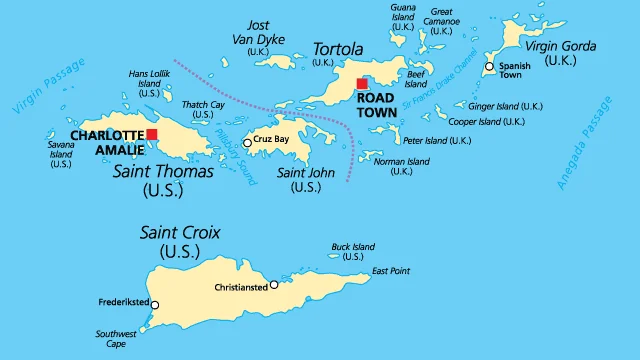
As a small group of islands 1,200 miles from Florida, with a nominal manufacturing base, we have little choice but to import our goods. As a result, increased import tariffs will threaten our way of life more than in one of the contiguous states. Proactive measures, such as seeking exemptions, diversifying import sources, and bolstering local production, are essential to mitigate the adverse effects and ensure the territory’s economic stability. However, with minimal geopolitical leverage and the lack of equitable representation in Washington, the USVI will likely have to grin and bear the consequences of a large-scale international trade war, further straining our budgets. We are essentially caught in the middle.
Get ready for a long winter.
Note: This article is based on information available as of February 5, 2025. The situation is evolving, and readers are encouraged to stay informed through official government communications and reputable news sources.




Leave a Reply