


The re-election of President Donald Trump carries significant implications for the US Virgin Islands. Last month’s election result will undoubtedly impact the territory’s federal funding, disaster recovery efforts, economic policies, climate change response, and the effectiveness of its leadership on Capitol Hill. While there is room for optimism, the Virgin Islands hurricane recovery, valued at approximately $20 billion, is at significant risk under the new administration. How will the largely Democratic Virgin Islands navigate the newly elected Republican majority?


In the first episode of Upfront, Governor Albert Bryan Jr. offered a compelling analogy to explain the politics behind President-elect Trump’s victory. “Imagine if it were the Virgin Islands,” he said, “and there was a white man preaching equality and peace while a black man was saying that locals should get everything, forget everyone else. Who would win?” I playfully retorted, “The black man,” sparking a candid moment of reflection about the dynamics of political messaging and voter psychology. This exchange highlighted the often polarizing forces in modern elections, underscoring how rhetoric can shape election outcomes.
Federal Funding and Economic Policies
The Trump administration’s renewed focus on fiscal conservatism has taken shape by establishing the Department of Government Efficiency (DoGE), a newly created body tasked with streamlining federal operations and ensuring responsible use of taxpayer funds. Adding to the intrigue is the announcement that Elon Musk will lead this office, which has drawn praise and skepticism. Musk’s reputation for bold innovation and aggressive cost-cutting could bring sweeping changes to how federal funds are allocated and monitored.
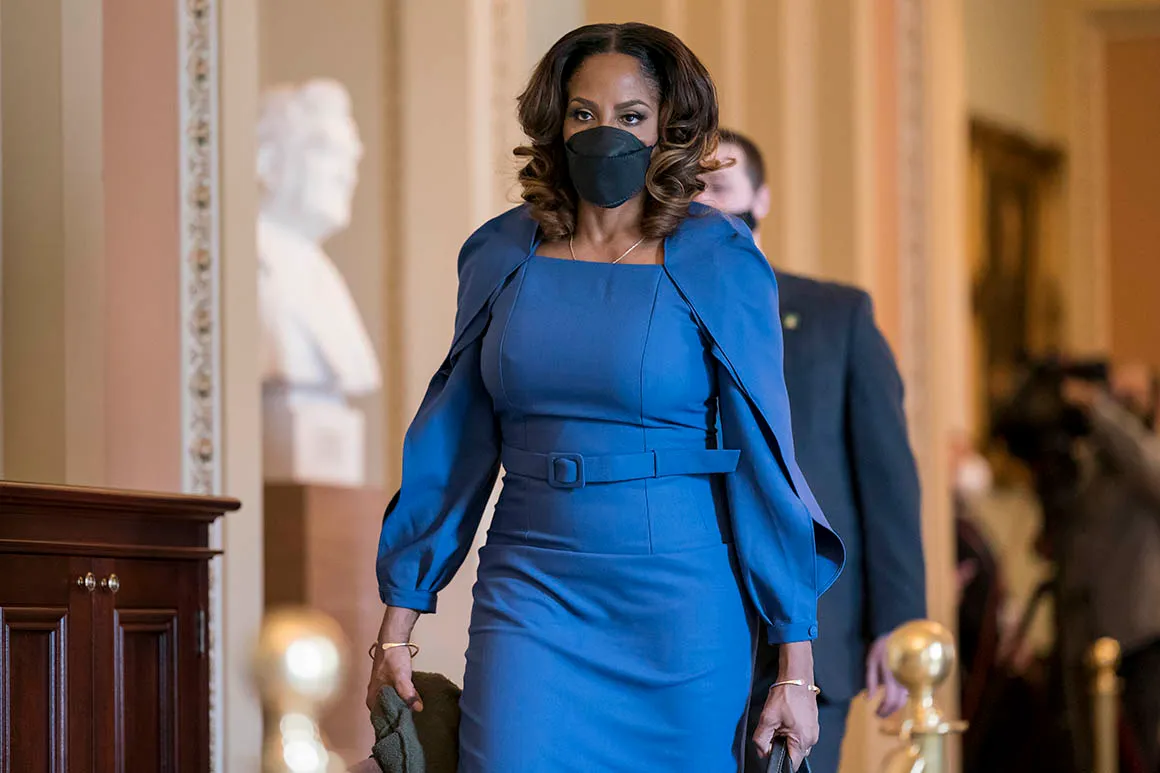
This development poses additional challenges for the Virgin Islands. Delegate Stacey Plaskett, the territory’s representative in Washington, has openly sparred with Elon Musk in the past, most notably during congressional hearings, over his companies’ regulatory practices and the role of social media in public discourse. This contentious relationship could further complicate the Virgin Islands’ ability to navigate the DoGE’s oversight and secure the timely disbursement of critical recovery funds.
Adding to these concerns is the USVI’s slow pace in spending its allocated recovery funds. During her November 2024 visit to the territory, Housing and Urban Development’s (HUD) Acting Secretary and proud Virgin Islander Adrianne Todman underscored this point, urging Virgin Islanders to “hold their government accountable” for completing much-needed federal projects. “If there’s any frustration from HUD’s lens, it is that things aren’t happening fast enough, and I’m sure that’s what people feel,” she said, emphasizing the critical need for urgency in moving forward with disaster recovery projects. Her comments underscore a growing concern that bureaucratic delays could jeopardize future funding, particularly under an administration with a heightened focus on oversight.
“If there’s any frustration from HUD’s lens, is that things aren’t happening fast enough and I’m sure that’s what people feel” – Acting Secretary of HUD, Adrianne Todman
The $20 billion earmarked for the USVI’s hurricane recovery is critical to rebuilding infrastructure, housing, and energy systems. Any disruptions or cuts to this funding could jeopardize years of progress, leaving residents and businesses in limbo. The stakes are extraordinarily high for a territory still recovering from catastrophic damage.
South Shore Implications
On a positive note, one potential benefit of a Trump presidency for the Virgin Islands is the prospect of reopening the shuttered Limetree Bay refinery, formerly HOVENSA, on St. Croix’s south shore. The refinery is more than just an industrial facility; it is a critical part of St. Croix’s economic identity. St. Croix struggles to generate sufficient revenue without the refinery, and the islands are visibly economically distressed.
I firmly believe the refinery is a net positive for the Virgin Islands; its operations have historically created thousands of jobs, boosted tax revenues, and supported local businesses, making it a cornerstone of St. Croix’s economic landscape. The refinery’s closure has left a void in the territory, and its reopening could provide a much-needed financial boost, restoring a sense of purpose and stability to the big island.
During his first term, Trump’s administration prioritized deregulation and industrial expansion, reopening the refinery in 2021. If he maintains this focus, the refinery’s return could become a reality, providing significant economic benefits. However, the facility has a history of environmental and health concerns, including air pollution and oil spills. Its previous closure due to environmental violations demonstrates the importance of balancing economic revitalization with sustainable operations.
Disaster Response and Recovery
The USVI’s geographic vulnerability to hurricanes demands unwavering federal support. During Trump’s first term, the territory received increased federal cost shares for emergency protective measures. However, political considerations often influence disaster aid decisions. With the Virgin Islands represented by a Democratic delegate and a Democratic governor, the impartiality of future disaster response efforts remains uncertain, especially given Trump’s history of partisan decision-making.
Governor Albert Bryan Jr., however, has expressed confidence that the Virgin Islands will not be singled out for political retribution. He points to the recent election of a Trump-aligned governor in Puerto Rico, suggesting that the administration’s focus will likely be broader and less divisive within the Caribbean territories. This relationship could shield the Virgin Islands from targeted political fallout, but skepticism remains among those wary of Trump’s unpredictable approach to governance.
Biden’s Visits to St. Croix and Their Economic Impact

Adding to the uncertainty of a Trump presidency is the potential end of a cherished tradition for the Virgin Islands. President Joe Biden vacationed annually on St. Croix during his time in office, often choosing the big island for his weeklong winter retreat. Notably, Biden was the first sitting US president to visit St. Croix since President Harry Truman in 1948, a historic milestone that brought unparalleled prestige to the island.
His visits elevated the Virgin Islands nationally and provided a significant economic boost. The influx of media attention, security teams, and visiting dignitaries injected much-needed dollars into the local economy, benefiting hotels, restaurants, car rentals, and other small businesses. For St. Croix, these visits helped reinforce its identity as a key destination and contributor to the broader Virgin Islands economy.
The absence of Biden’s annual visits under a Trump presidency will likely be felt deeply. It raises questions about whether Biden will continue vacationing on St. Croix once he leaves office. While his return is uncertain, the economic benefits and attention his visits brought will be sorely missed by many Virgin Islanders.
Conversely, Donald Trump has shown little interest in the Virgin Islands and will unlikely visit any of them during his presidency. This lack of engagement could further distance the territory from the White House’s attention and resources.
Climate Change and Energy
The Trump administration’s rollback of climate regulations and skepticism toward renewable energy threaten the Virgin Islands’ efforts to build resilience against climate change. Rising sea levels, worsening storms, and infrastructure vulnerabilities make federal cooperation on sustainability initiatives essential. However, Trump’s prioritization of fossil fuels over renewables could hinder the territory’s ability to secure funding for green energy projects, putting long-term sustainability at risk.
Immigration
While my mother was a third-generation Crucian, my father was from Dominica. Like many Virgin Islanders, I have witnessed firsthand how the territory is a melting pot of cultures and communities from neighboring Caribbean islands. Immigrant labor is vital to the Virgin Islands workforce, particularly in construction and hospitality.
Trump’s hardline immigration policies and proposals for mass deportations pose a direct threat to this dynamic as such measures could devastate the Virgin Islands’ economy and community fabric. If immigrant workers are targeted for deportation, the labor shortages that follow could stall disaster recovery efforts, disrupt businesses, and hinder the growth of the local economy.
Beyond economics, the Virgin Islands’ cultural diversity could also face challenges. Our shared history and interconnectedness with other Caribbean nations are central to our identity. A reduction in immigration or a crackdown on immigrant communities would ripple through schools, neighborhoods, and businesses, fundamentally altering the territory’s social and cultural landscape.
Will Trump’s immigration policies extend to the Virgin Islands with the same enthusiasm as the mainland? It remains uncertain, but the potential for disruption underscores the need for local leaders to advocate for policies that protect immigrant communities and support the workforce that keeps the territory running.
Stacey Plaskett and Trump’s Vindictiveness
A critical layer of complexity for the Virgin Islands stems from the role of Delegate Stacey Plaskett. As a key member of the impeachment team during Trump’s second impeachment trial, Plaskett has been a vocal critic of Donald Trump, earning national recognition for her work during the investigation into the Capitol riots. However, her high-profile role has also made her a target for Trump’s ire.
Just yesterday, Trump escalated his rhetoric by calling for members of the January 6 Committee to be jailed. This alarming declaration prompted President Joe Biden to consider preemptive pardons for committee members, signaling the gravity of the threat posed by Trump’s comments. The potential friction in Washington, stemming from Plaskett’s work as a public servant, underscores the challenges she could face in advocating for the Virgin Islands under a Trump administration. Plaskett’s contentious history with Trump could complicate the territory’s ability to secure critical federal support. With the Virgin Islands heavily reliant on federal funding for recovery and infrastructure projects, this dynamic could result in delays or reductions in essential aid. Combined with her previously fraught interactions with Elon Musk, now leading the DoGE, Plaskett may find herself navigating an exceptionally hostile political landscape. This potential friction could create significant challenges for Plaskett as she works to advocate for the territory’s needs, including the $20 billion recovery fund.
Conclusion
A second Trump presidency poses significant risks for the Virgin Islands, particularly the ongoing hurricane recovery process. While Governor Bryan has expressed optimism due to Puerto Rico’s alignment with the Trump administration, skepticism remains about the Virgin Islands’ ability to avoid political fallout. The absence of Biden’s annual visits will also be a loss for St. Croix, which benefited from the economic and media attention they provided. The path forward will test the resilience and resourcefulness of Virgin Islanders as they strive to secure their future amidst political uncertainty and potential disengagement from the White House.
Damn, I sure wish we could vote.




Leave a Reply