


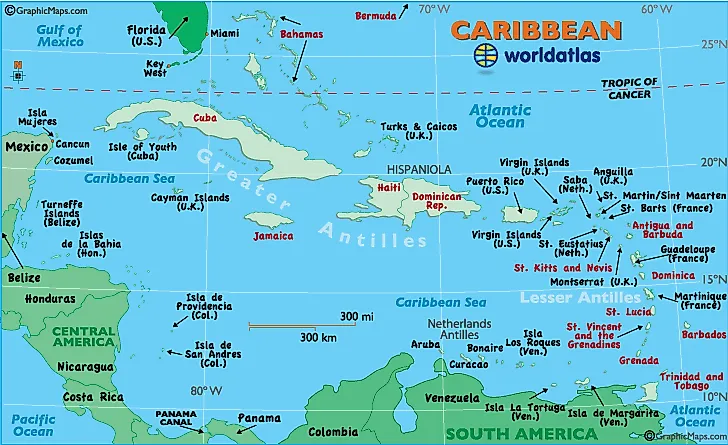
Caribbean Sea – Caribbean nations are beginning to feel the fallout of a possible military conflict between the United States and Venezuela. As tensions rise between the two countries, tourism departments up and down the quiet waters of the Caribbean Sea are beginning to calibrate what the potential cost of such a conflict might be to their most precious product, tourism.


Even without a shot being fired between the two nations, the threat of conflict is already reshaping flight routes, causing cruise lines to rethink their landing ports, and raising new worries for a region that is still in the recovery mode from the COVID 19 pandemic and other economic setbacks.
From hotel lobbies in Punta Cana to cruise terminals in the U.S. Virgin Islands (USVI), a quiet unrest is settling into the thinking of tourism department heads. One of the world’s most tourism-dependent regions is caught in the gunsights of U.S. President Donald Trump’s attack plan on Venezuela. The distinct possibility of a military confrontation is casting long shadows over the Caribbean just as the start of the tourism season moves into high swing.
Traveler behavior in the U.S., Canada and Europe is falling under the possibility of war. Airlines are reviewing flight paths and preparing contingency routes near and around Venezuelan airspace as Trump recently issued a no fly zone order above and around the South American country.
Tourism Ministers and Department Commissioners are busy holding emergency meetings planning on how to assess what exactly a military confrontation might mean to their tourism product. With millions of jobs and hundreds of million dollars at stake in the region all angles need to be explored.
The recent startling attacks of suspected Narco-terrorists and drug smugglers in otherwise calm Caribbean waters, amounting to 80 plus people killed in 21 boats, by the heavy U.S. military presence has sent a strong message to nearby islands, amounting to a direct threat to the national security of many Caribbean nations.
Barbados Prime Minister Mia Mottley condemned the U.S. attacks.
“We stand with the rule of law and we believe if there is other intelligence available that would cause you to take action that is an immediate threat to you as a nation then you need to share it with us. But on the face of it conflated law enforcement with military action is a dangerous step,” she stated. “We do not accept that any nation in our region or the greater Caribbean should be the subject upon them of any unilateral expression of force by any third party.”
Prime Minister Mottley’s statement at the Barbados Labor Party’s 86th Annual Conference was made hours before the US guided-missile destroyer, USS Gravely, arrived off the coast of Trinidad.
“The Caribbean is viewed as a single destination,” said a senior tourism official in Jamaica. “If instability flares up in one place, the entire region feels it.”
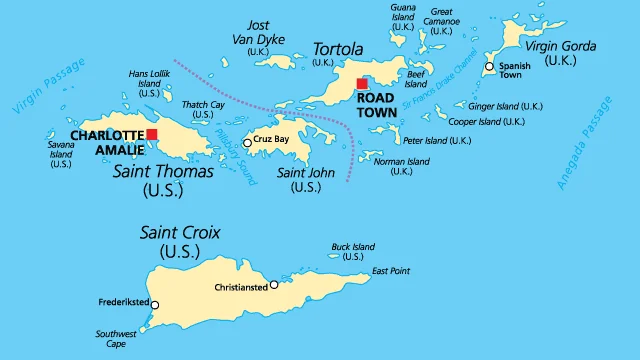
Most Caribbean nations’ economies would near-collapse if their tourism sector were disrupted to any great extent. They rely heavily on the income from the travel and tourism industry, with the USVI having the highest number of arrivals.
The Caribbean has long marketed itself as a haven of calm, far from global tensions. But Venezuela’s location, along key aviation and maritime corridors, makes its current political turmoil, along with U.S. claims that the Maduro regime in Venezuela is a corrupt arm of the drug cartels, a tempting invitation to unleash similar political unrest that could very well stretch into other parts of the region.
Trump’s recent blunt threats to Maduro to basically ‘leave Venezuela immediately’ force other major drug-producing countries like Columbia, Peru and Bolivia, that smuggle drugs into the U.S., and the quasi-corrupt regimes that govern them, into a defensive stance that could unsettle the entire Caribbean region.
The recent orders by Trump of restricted airspace around Venezuela complicates flights to Aruba, Curacao, Trinidad and Tobago, and other parts of the eastern Caribbean.
Analysts warn that an all-out military conflict would have a quick ripple effect throughout the region. Airlines might be forced to reroute around Venezuelan airspace raising fuel and ticket costs. Leary investors might decide to put a hold on important hotel and port projects already underway or on the drawing boards. And a surge in Venezuelan migrants seeking refuge on nearby islands could put a strain on social services and inadvertently fuel domestic tensions.
“The concern is not just conflict,’ a Virgin Islands tourism analyst stated. “It’s the uncertainty that surrounds it, and how that uncertainty affects immediate plans and future plans. Who knows how long a war could drag on. An elongated conflict would certainly be unsettling to the Virgin Islands given the deployment of U.S. forces in Puerto Rico.”
Tourism accounts for more than a third of economic activity in many Caribbean islands, and more than a half in some, so even small disruptions of cash flow can have major consequences. Many Caribbean nations are currently carrying high levels of debt, so they have little fiscal space left to absorb even a minor financial shock.
Right now, everything looks like the start of a normal tourism season. Tourists are beginning to flow down into the Caribbean islands as they escape the bitter cold weather up north and the ultra-busy tourist season kicks underway. But with Puerto Rico quickly becoming one of the U.S. military’s main staging areas, for a war that is beginning to look more and more probable with each passing day, tourism officials in the USVI are privately conceding that the situation is among the most delicate the region has faced in years.






Leave a Reply