


Washington, D.C. – The Trump Administration has brought U.S. and USVI onshore wind farm development projects to a screeching halt, citing national security concerns, specifically potential radar interference. Approvals for about 165 onshore wind projects throughout the U.S. and the U.S. Virgin Islands on private lands are being held up by the Pentagon according to the American Clean Power Association and sources close to the matter.


The affected projects include wind farms that were awaiting final sign-off, others in the middle of negotiations and some that typically would not require oversight by the Pentagon.
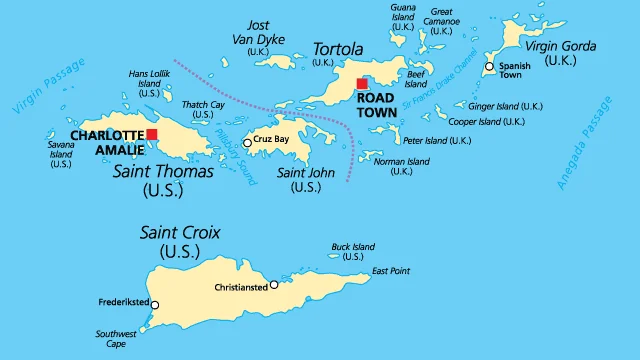
As of early 2026, the U.S.Virgin Islands has two wind farms in the early stages of development. The energy landscape in the USVI is rapidly evolving, with solar farms taking the lead along with wind projects that are focused on increasing renewable capacity to meet the Territory’s “Vision 2040” goals.
Most recently, there have been plans rolled out to develop wind energy on the south shore of St. Croix in collaboration with the St. Croix Refinery. Reports from April 2026, indicate an agreement has been reached to build a hybrid renewable-energy system, including vertical-axis wind turbines on the coke deck peninsula inside Refinery grounds. On St. Thomas, a wind project has been recently proposed for Bovini Point, which is expected to involve multiple turbines.
In 2023, the Virgin Islands Water and Power Authority (WAPA) reportedly approved purchase agreements for wind power on both St. Croix and St. Thomas.
Wind farm project developers have recently reported a lack of communication, canceled meetings, and the cessation of application processing since August 2025 by various government agencies. The pause reportedly affects projects at various stages, including those nearing final sign-off, and some that typically would not require Pentagon oversight.
The Trump Administration has also taken measures to block offshore wind project development. In April 2026, it was reported that the Administration was paying energy companies hundreds of millions of dollars to abandon offshore wind leases and redirect investments into fossil fuels, such as oil, gas and Liquefied Natural Gas (LNG). In December of 2025, the Department of the Interior paused five large-scale offshore wind projects along the East Coast to investigate radar interference and other national security vulnerabilities.
Just in the last week, the Trump Administration blocked two permitted U.S. wind energy projects from development with an agreement to pay millions of dollars in refunds to the companies behind them if those funds were reinvested in oil and gas. The U.S. Department of the Interior framed the cancellations as a way to “promote U.S. energy security and affordability by funneling funds away from intermittent, higher-cost energy sources toward proven conventional solutions.”
President Trump has consistently criticized wind energy, often describing turbines as inefficient, costly, ugly, and detrimental to the landscape. These actions are part of a broader effort by the Administration to prioritize fossil fuel investments over renewable energy.
“Unable to defend its offshore wind actions in court, the Administration is using taxpayer dollars to buy foreign companies out of legally executed offshore wind leases, and the costs to consumers’ pocketbooks is staggering,” said Sam Salustro, Senior VP of the pro-offshore wind group Oceanic Network.
“Now that hardworking Americans are no longer footing the bill for expensive, unreliable, intermittent energy projects, companies are once again investing in affordable, secure energy infrastructure,” said U.S. Secretary of the Interior Doug Burgum.
In March, 2026, Trump spoke at a meeting with tech industry leaders, where he called wind energy worthless and ugly. “We don’t do wind in this because it’s a loser,” he told the crowd.
U.S. House Representatives Jared Huffman and Jamie Raskin called the back door agreements outrageous and unlawful.
“We demand answers about the legal basis for this closed-door deal to pay energy companies not to provide affordable, clean, renewable energy to American families,” the two Congressmen wrote to Mr. Burgum and acting Attorney General Todd Blanche. “President Trump has been relentless in his attacks on affordable, clean energy. This backdoor deal to cancel these projects will undeniably have negative economic, environmental, and national security impacts for which this Administration must answer.”
In 2012, before Trump became President, he tried to stop 11 turbines from being constructed near his golf course in Scotland because he believed they would ruin the view. Despite his attempts, which included warning the Scottish Parliament that the construction of the turbines would affect tourism, those turbines today now produce enough energy to supply up to 80,000 homes in the area.
Scotland is a global leader in wind energy with 17.7 gigawatts (GW) of installed capacity as of mid-2025 (an amount equal to powering 5 to 6 million American homes). Despite certain grid bottleneck problems, Scotland continues to expand its capacity with major offshore projects currently under development.







Leave a Reply