


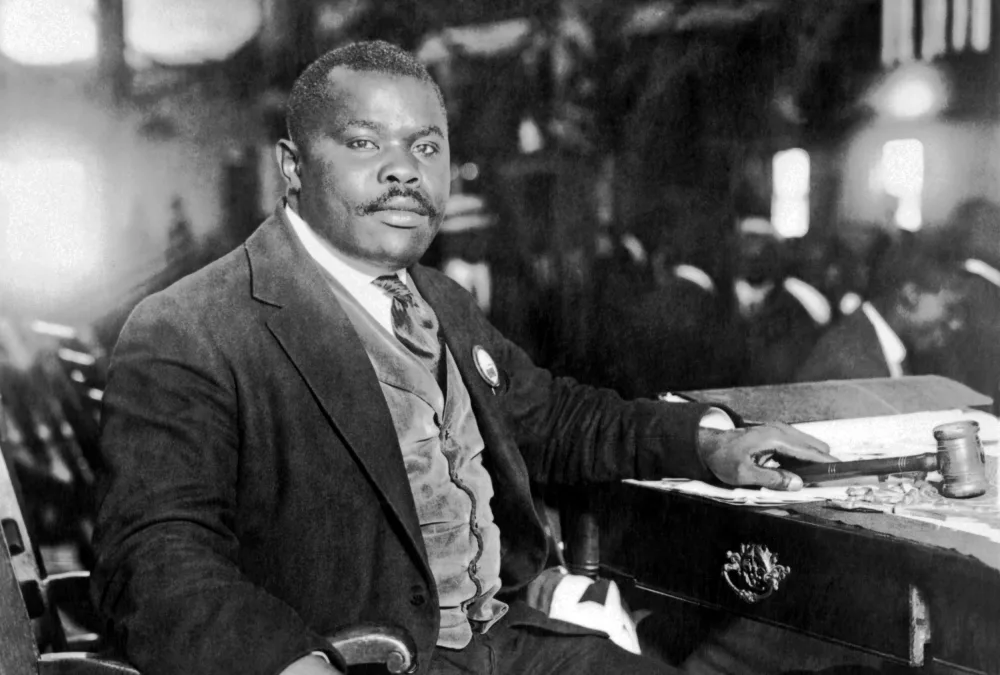
“Look to Africa, when a black king shall be crowned, for the day of deliverance is at hand.”


With these words, Marcus Mosiah Garvey is said to have prophesied the second coming of Jesus Christ in the coronation of His Imperial Majesty Haile Selassie I of Ethiopia, giving rise to the Rastafarian Movement.
Marcus Garvey, a Jamaican-born political activist and black nationalist, founded the Universal Negro Improvement Association (UNIA) and the African Communities League. He was a staunch proponent of Pan-Africanism, a philosophy that emphasized black unity as a means to achieve social, economic, and political progress and uplift people of African descent. Garvey’s ideology was significantly influenced by Edward Wilmot Blyden, a Virgin Islander who was one of the founding thinkers of Pan-Africanism. Highlighting the importance of knowledge, Garvey once declared, “Never forget that intelligence rules the world and ignorance carries the burden.”
Garvey’s commitment to justice and equality emerged early in his life. As a printer in Jamaica, he became deeply aware of labor and union issues. In his twenties, Garvey traveled extensively across South America, Central America, and England, witnessing firsthand the systemic challenges faced by black people in Jamaica and abroad.
In 1916, Garvey relocated to the United States, where he actively promoted the UNIA, gaining national recognition and international acclaim. He established The Negro World, a newspaper that circulated UNIA’s ideals, including black unity, African ancestral pride, and autonomy. Within six years of his arrival, Garvey amassed an estimated four million followers, known as Garveyites, who embraced his doctrines of self-sufficiency, black separation, and unity.
Garvey’s entrepreneurial spirit led him to create the Negro Factories Corporation, aimed at fostering self-reliance. The corporation operated grocery stores, restaurants, a laundromat, a printing plant, and real estate ventures. Garvey’s influence extended to prominent leaders such as Malcolm X (whose father was a Garveyite), Elijah Muhammad of the Nation of Islam, Stokely Carmichael (later known as Kwame Ture), and Ghana’s first president, Kwame Nkrumah.
Dr. Martin Luther King Jr. recognized Garvey’s profound impact, calling him “the first man of color in the history of the United States to lead and develop a mass movement to give millions of Negroes a sense of dignity and destiny and make the Negro feel he was somebody.” Garvey also introduced the Pan-African flag—composed of red, black, and green—which symbolizes the blood of African ancestors, the unity of black people, and the hope for a prosperous future.
Garvey’s legacy resonates deeply in Rastafarian culture. His contributions are celebrated in reggae music, with artists like Burning Spear, Mighty Diamonds, Steel Pulse, and Culture paying tribute to him. Bob Marley’s “Redemption Song” draws inspiration from Garvey’s words: “We are going to emancipate ourselves from mental slavery because whilst others might free the body, none but ourselves can free the mind.”
One of Garvey’s most ambitious visions was the repatriation of black people to Africa. In 1919, he founded the
Black Star Line, a shipping company intended to facilitate this goal and support global trade for black communities. While the initiative inspired hope, it faced financial and logistical challenges, ultimately leading to Garvey’s prosecution for mail fraud in 1923, for which he was sentenced to 5-year incarceration. Many viewed the charges as politically motivated. Garvey was deported to Jamaica in 1927 and later resettled in England in 1935, until his death in 1940.
Despite these setbacks, Garvey’s influence endured. Decades of efforts to restore his legacy culminated in a significant moment on January 19, 2025, when then President Joe Biden issued a posthumous pardon, exonerating Marcus Garvey and restoring his good name.
Garvey’s life and his work is a testament to the enduring power of unity, self-reliance, and the unyielding pursuit of justice for Africans and their descendants.
“A people without the knowledge of their past history, origin and culture is like a tree without roots.”






Leave a Reply