


Every once in a while, an athlete emerges who defies expectations, dominates the court, and commands respect from everyone watching. At this year’s HBCU Athletic Conference (HBCUAC), a moment that should have been a celebration of talent and perseverance instead left many in stunned disbelief. Amayoa’ah Phillips, the electrifying 6’1″ guard for the University of the Virgin Islands’ Buccaneers, was named to the Second Team.


A distinction, yes. An honor, undoubtedly. But also… an injustice.
For those unfamiliar with the selection process, the HBCUAC determines First and Second Team honors through a vote by the conference’s head coaches. Each coach ranks players based on their performance throughout the season, with the highest point totals securing a spot on the First Team—reserved for the best of the best. The next tier of top performers is placed on the Second Team. In theory, this system should be fair. But the numbers tell a different story—one that raises serious questions about bias, oversight, or both.
If this system is truly based on performance, then how did a player with Phillips’ stats and impact not make First Team? Numbers don’t lie. Phillips ranks second in overall scoring among the top six players in the HBCUAC, trailing only Jamal Gibson of SUNO, who put up a dominant 23.2 points per game compared to Phillips’ 22.7. Phillips also delivered efficiency with a 46.4% field goal percentage, solid perimeter shooting at 32.5% from three, and defensive hustle with 1.7 steals per game. Among the supposed ‘First Team’ selections, there are players whose numbers pale in comparison.
And yet, when the HBCUAC unveiled its First Team selections, Phillips was missing from the list.
His teammates sat in stunned silence. His coaches, though maintaining their composure, could not hide the disappointment. His family and friends, who have stood by him throughout his journey from the U.S. Virgin Islands, were left with a question that felt heavier than the moment itself:
Why?
Let’s be absolutely clear: Phillips was one of the most dominant players in the entire conference. To add insult to injury, Newcomer of the Year—an award meant to recognize the most outstanding new player in the conference—was given to someone else, despite the fact that multiple officials and spectators expressed their belief that Phillips was the clear choice. Even fans and supporters of opposing teams acknowledged his dominance, approaching him after games to offer words of encouragement.
So, if the stats favor Phillips, and the eyewitness testimony supports his case, how did the coaches vote against him?
By no means is this is not an attempt to diminish the achievements of the players who did make the First Team. Every young athlete who stepped on that court earned their recognition. What must be questioned is the criteria used to determine these selections.
Specifically, what criteria were they using that led them to ignore one of the best players in the conference?
Who decides these awards?
Coaches.
And when a deserving player like Phillips is passed over despite having one of the best statistical seasons in the conference and votes are cast behind closed doors, subjectivity, politics, and bias can inevitably creep in. While no one is outright saying it, the question must be asked:
Are athletes from the U.S. Virgin Islands receiving the same consideration as their mainland counterparts?
Phillips is not the first, nor will he be the last, athlete from the Virgin Islands to dream big. Legends like Tim Duncan and Raja Bell paved the way for young players from the territory to believe that they, too, can make it to the NBA.
Phillips is determined to join their ranks,
dedicating himself to the game with the same hunger and drive that brought those before him to the highest level. But recognition at the collegiate level is a crucial step in this process, and being overlooked at this stage raises concerns about whether Virgin Islands athletes are truly being given a fair chance.
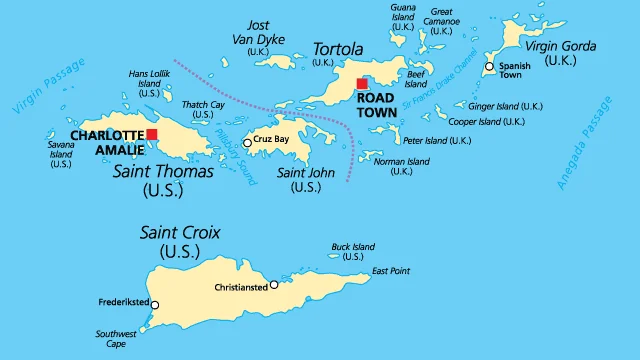
Phillips’ omission from the First Team and the Newcomer of the Year award is just the latest example of this recurring pattern. It sends a disturbing message: No matter how hard you work, no matter how dominant you are, if you’re from the Virgin Islands, you have to fight twice as hard just to get what should already be yours. For the young athletes growing up in St. Thomas, St. Croix, St. John, and neighboring Caribbean islands watching Phillips forge his path toward the professional level, moments like these can send a discouraging message. And for an organization like HBCUAC, whose very foundation is built on championing overlooked and historically marginalized athletes, things like this should never happen.
This is not just about one player or a name on a list. This is about fairness, recognition, respect, and accountability.
No one here is asking for favors. Phillips has earned his place at the top. He’s already proven he belongs on the biggest stage, and this won’t be the last time his name is in the conversation. But if the HBCUAC wants to maintain its credibility, it must do better.
To the HBCUAC selection committee: What was the reasoning behind this decision? Was there something Phillips lacked that justified his exclusion from the First Team? If so, what was it? And if no justifiable answer can be provided, then the real question remains: will
the HBCUAC truly listen?
The basketball world is watching and waiting to see if this basketball circling the rim for the game winning shot of truth and justice, will fall through the net, or bounce out… losing the game.
Emmanuel Phillips, St. Thomas






Leave a Reply