


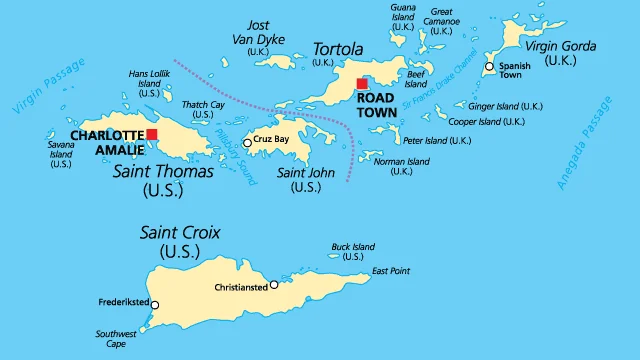
As part of the U.S. Virgin Islands (USVI) 2025 Coral Reef Week, Litty Hour celebrates storytelling and the environment in coastal communities. Taking place on April 16, 2025, at the Bertha C. Boschulte Middle School on St. Thomas, Black in Marine Science (BIMS), Large-Scale CoPe: Strongs Coasts, and BlueGAP, will host an exclusive screening featuring the documentaries: A Splash of Color, and Harm in the Water; along with shorts, and BIMS bites.
The event will bring together current and future leaders in ocean, coastal, and hazardous research and individuals who incorporate storytelling into their science to raise awareness and engage people in marine science. Documentary filmmakers have collaborated with scientists and community leaders to share stories about the work of these champions in dynamic films funded by BlueGAP, a National Science Foundation Blue Economy Convergence Accelerator project.


After the screening, there will be a Blue Table Talk panel discussion featuring filmmakers and special guests.
Professor Maya Trotz, who is Professor of the Department of Civil & Environmental Engineering with the University of South Florida, in Tampa, and heads up Project BlueGap, discussed the highlights of the USVI’s Coral Reef Week’s activities with Yellow Cedar Media.
“I think there are multiple ways in which students learn about marine science. They learn by being in the sea, by reading, by actively participating in marine science events, and by various types of media. Video is of course a very popular learning method for today’s youth,” said Professor Trotz, the Principal Investigator on the project. “The Litty Hour is something our project BlueGAP supports as we look to work in coastal communities around environmental learning. BlueGAP looks to connect communities upstream and downstream to address particular water quality issues. Currently, we have been working in three locations, St. Croix in the U.S. Virgin Islands, Tampa Bay, Florida, and the Mississippi River in Iowa,” Ms. Trotz went on. “Coral Reef Week invites an opportunity to share some of the media that has been produced with our partners in the Virgin Islands around marine spaces. And also introduce other media in the USVI around marine spaces.”

Camille Gaynus, Chief Science Officer for Black in Marine Science, spoke to Yellow Cedar Media about the upcoming event.
“The more people we can equip with knowledge of how our coastal system is changing, the more they can get involved, which makes the research we do as scientists that much more accurate. This is particularly true of younger folks who are still determining what they want to do in life,” said Ms. Gaynus. “We see these programs as an encouragement to join marine scientists, as either a professional or just as something they enjoy following. Especially being here in St. Thomas where the ocean is all around us.
“I am going to be guiding students and community members through the collection of Environmental DNA. This technology allows us to collect water, soil, and sediments that we can isolate the DNA that living organisms shed as they pass through,” Ms. Gaynus explained. “It’s a way we can determine the biodiversity of different regions. We might not be able to pick up different species with our eyes because they are cryptic or because they are super small like bacteria. We are also presenting some activities with Peter Bailey from Yellow Cedar Media. He will be organizing presentations of films on marine science with teachers and middle and high school students. We are also going to have networking events.”
Black in Marine Science (BIMS) is a 501(c)(3) non-profit aimed to celebrate Black Marine Scientists, spread environmental awareness, and inspire the next generation of scientific thought leaders.






Leave a Reply